



Low Pressure Sensors in Pneumatic Medical Technology
In modern medical technology, the control and monitoring of pneumatic systems at low pressures has become an essential engineering discipline. Low‑pressure sensors play a vital role in ensuring precise, reliable and safe operation of a wide range of pneumatic medical devices — from ventilators and anaesthesia systems to respiratory support and portable therapy units. Their performance directly influences both clinical outcomes and patient comfort, particularly in applications where the slightest deviation in pressure can have significant consequences.
Pneumatic mechanisms are widely used in medical equipment because they offer simplicity, reliability and clean operation. They form the core of devices that manage air or gas flows for breathing support, drug delivery, and therapeutic or diagnostic functions. However, accurate measurement and control at low pressures — often in the range of a few Pascals up to a few kilopascals — demand specialised sensor technology tailored to these environments. Low‑pressure sensors fulfil this need by converting minute pressure variations into stable electrical signals that can be reliably interpreted by the device’s control electronics.
One of the most critical applications of low‑pressure sensing in pneumatics is in respiratory support devices, including ventilators and continuous positive airway pressure (CPAP) machines. In ventilators used for critical care, sensors monitor the pressure within patient circuits to ensure that breaths are delivered at the correct pressure and volume. This is crucial for tailoring the support from infants to adults needs and preventing lung injury or discomfort. Differential pressure sensors are typically deployed between valves and regulators to track inspiratory and expiratory pressures with High accuracy and long term stability.

Similarly, CPAP devices engage low‑pressure sensors to maintain a constant positive airway pressure, helping to keep airways open during sleep for patients with obstructive sleep apnoea. The systems detect when the patient initiates inspiration and adjust fan speed or valve position accordingly, requiring sensors capable of resolving very small pressure changes with very fast response times.
Beyond respiratory applications, low‑pressure sensors are also integral in anaesthesia delivery systems, where they help regulate and monitor the supply of gas mixtures to ensure consistent anaesthetic concentration. In infusion pumps and other drug administration technologies that employ pneumatic actuation, accurate pressure measurement ensures correct flow rates and helps prevent over‑ or under‑delivery of medication.
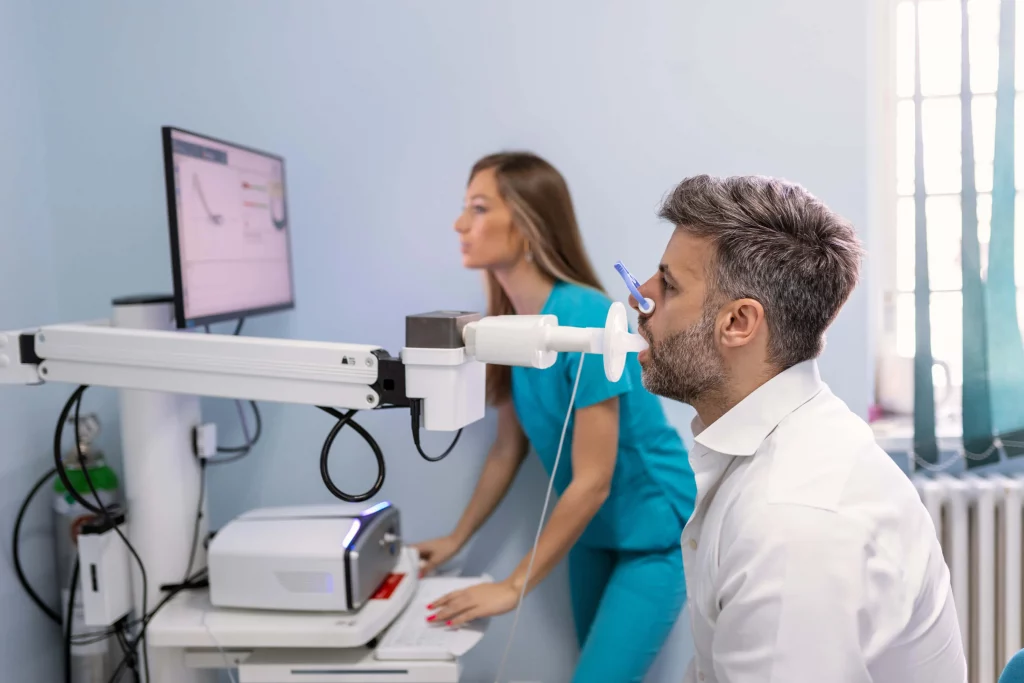
In spirometers differential pressure sensors measure very small pressure differences across a flow element created by the patient’s airflow in the breathing tube. The sensor is usually mounted right next to or integrated into the pneumotachograph or flowmeter head for minimal delays and high-quality signal capture. Thanks to their high sensitivity and fast sampling rates, both very low and very high flow rates can be measured precisely.
Advances in microelectromechanical systems (MEMS) have greatly enhanced the capabilities of low‑pressure sensors used in medical pneumatics. Modern MEMS sensors combine miniature size with high stability, low power consumption and excellent long term stability. These attributes make them particularly suitable for portable and wearable medical devices, where size and energy efficiency are paramount without compromising accuracy.
From a design perspective, choosing the right low‑pressure sensing solution involves careful consideration of the sensor’s range, resolution, long‑term drift and compatibility with the medical device’s control architecture. Differential and relative pressure variants are commonly selected. Absolute pressures need to be measured to compensate for ambient pressure changes. In critical environments, additional requirements such as biocompatibility, sterilisation resistance and regulatory compliance further influence sensor selection.
Digital sensor interfaces allow the direct communication to microcontrollers and easy integration into medical devices.
In summary, low‑pressure sensors underpin the safe and effective operation of pneumatic systems in medical technology. Their ability to detect fine pressure changes with precision enables advanced control of respiratory support, anaesthesia, drug delivery and portable therapeutic devices and diagnostic contributing directly to improved patient care and clinical outcomes.