


Technical terms in pneumology
Pneumology: Understanding the language behind lung function diagnostics
Pneumology is the medical speciality concerned with the lungs, airways and respiratory system. It covers the diagnosis, monitoring and treatment of conditions that affect breathing, from asthma and COPD to restrictive lung diseases and sleep-related breathing disorders. In everyday clinical practice, pneumology depends heavily on precise measurements. This is why reliable sensor technology and reproducible diagnostic procedures play such an important role.
For many people outside the medical field, the terminology used in pneumology can appear highly technical at first glance. Terms such as flow-volume curve, PEF, FEV1 or BTPS are essential in lung function testing, yet they are not always self-explanatory. A clear understanding of these terms helps to interpret measurements correctly, compare results over time and improve diagnostic quality.
At All Sensors, we know that pneumology is not only about capturing data, but also about creating a reliable basis for medical decisions. This glossary article explains key technical terms in pneumology in a straightforward and accessible way. Whether the focus is on spirometry, respiratory diagnostics or pressure-based measurement technology, these definitions provide useful orientation. If your application requires dependable sensor solutions for pneumology, our team will be pleased to support your project.
Flow-volume curve in pneumology
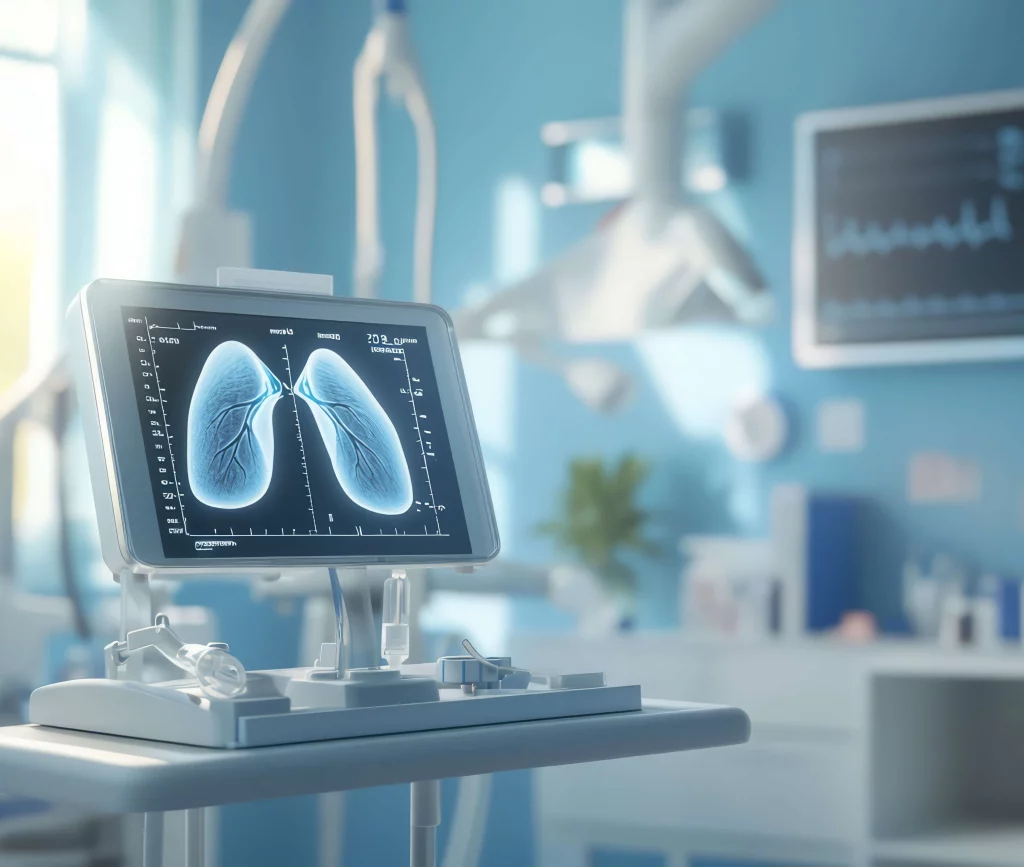
One of the most important visual tools in pneumology is the flow-volume curve. It is a graphical representation of airflow in relation to lung volume and is a central part of spirometry. On the vertical axis, the airflow is shown in litres per second. On the horizontal axis, lung volume is displayed in litres.
In pneumology, the flow-volume curve is used to assess how effectively a patient can inhale and exhale. It provides a quick visual impression of the breathing pattern and can help identify whether a ventilatory disorder is likely to be obstructive or restrictive. A healthy curve typically rises steeply at the beginning of exhalation, reaches a peak and then falls continuously until exhalation is complete.
This makes the flow-volume curve especially valuable in pneumology because it combines measured values with immediate visual interpretation. It also helps trained professionals recognise whether the patient has performed the breathing manoeuvre correctly. For device manufacturers and system developers in pneumology, this means that the underlying sensor technology must respond quickly and deliver stable, repeatable results.
PEF:
peak expiratory flow
FEV1: forced expiratory volume in one second
PEF stands for peak expiratory flow. In pneumology, this value describes the maximum airflow achieved during a forceful exhalation. It is an important parameter in lung function testing because it indicates how quickly air can be expelled from the lungs.
PEF is widely used in pneumology for monitoring respiratory conditions such as asthma and COPD. Reduced values may indicate airway narrowing or impaired respiratory performance. Because PEF can change depending on the patient’s condition, it is especially useful when measurements are repeated over time and compared under similar conditions.
From a technical point of view, pneumology requires sensors that can capture these rapid pressure and flow changes without delay. Fast sensor response and good reproducibility are therefore particularly important when measuring PEF accurately.
Another key term in pneumology is FEV1. This abbreviation stands for forced expiratory volume in one second. It describes the volume of air a person can exhale forcefully within the first second after taking a maximum breath in.
In pneumology, FEV1 is one of the most significant indicators of lung function. It is used to evaluate airway obstruction and plays a central role in the assessment of diseases such as COPD and asthma. A lower FEV1 value may indicate that the airways are narrowed or that exhalation is impaired.
Because therapeutic decisions in pneumology often depend on comparing results over longer periods, it is essential that FEV1 measurements remain reliable and consistent. This is where stable sensor systems make a difference. If measurements are to support clinical judgement, the technology behind them must deliver trustworthy long-term performance.
COPD in pneumology
BTPS
in pneumology
COPD stands for chronic obstructive pulmonary disease. In pneumology, COPD refers to a chronic lung disease in which the airways are permanently narrowed and lung function progressively declines. Exhalation is particularly affected, which is why patients often experience shortness of breath, reduced physical performance and persistent coughing.
COPD is one of the most relevant disease patterns in pneumology and is frequently assessed using spirometry. Parameters such as the flow-volume curve, PEF and FEV1 help clinicians to evaluate the severity of the disease and monitor its progression. This makes accurate and reproducible measurements essential for meaningful diagnosis and follow-up.
BTPS stands for Body Temperature, Pressure, Saturated. In pneumology, this term describes the physical conditions inside the lungs: a body temperature of 37 °C, ambient pressure and air that is fully saturated with water vapour. These conditions are important because measured flow and volume values must be corrected to reflect the actual situation in the body.
Without BTPS correction, measured values in pneumology would be less comparable and potentially misleading. For this reason, factors such as temperature, humidity and ambient pressure must be taken into account during lung function measurement. Intelligent sensor solutions can automate this process and reduce manual effort for medical staff.
Why technical understanding matters in pneumology
Pneumology relies on precise terminology because every measured value contributes to diagnostic interpretation. Understanding terms such as flow-volume curve, PEF, FEV1, COPD and BTPS helps to create a stronger connection between measurement technology and medical application. It also highlights why long-term stability, fast response behaviour and reliable performance are so important in pneumology.
If you are developing devices or systems for pneumology and need dependable sensor technology for respiratory diagnostics, All Sensors will be glad to support you with suitable solutions for demanding applications.
Learn more about pressure sensors in pneumology
We interviewed Dr. Steffen – an expert for pneumology, if you are interested in the interview, please visit our blog section or contact us for tailored support.